Is Windows 11 for gaming a good choice in 2026 Many gamers are asking if upgrading to Microsoft's latest operating system is worth it for their passion. This comprehensive guide dives deep into Windows 11's performance features compatibility and overall value for the modern gamer. We explore everything from DirectStorage benefits to game mode optimizations and potential drawbacks. Whether you are a casual player who enjoys a few hours after work or a dedicated enthusiast aiming for peak performance balancing gaming with life can be a challenge. We address common pain points like optimizing settings on a budget choosing the right hardware and ensuring your favorite titles run smoothly. Discover how Windows 11 leverages cutting-edge technology to enhance your gaming experience while offering practical solutions for real-world gaming scenarios in today's fast-paced world. Get the insider tips to make an informed decision for your gaming rig and ensure you are getting the most out of every play session.
Is Windows 11 worth it for gaming in 2026?
Yes, for most gamers with modern hardware, Windows 11 is a solid choice in 2026. Key features like DirectStorage and Auto HDR, combined with ongoing performance optimizations, provide a smoother and more visually enhanced gaming experience. While Windows 10 remains viable, Windows 11 offers forward-looking technologies that leverage newer hardware.
How does Windows 11 improve game loading times?
Windows 11 significantly improves game loading times through DirectStorage. This technology allows games to load assets directly from fast NVMe SSDs to the GPU, bypassing the CPU. This reduces bottlenecks and dramatically speeds up the process, especially noticeable in large, open-world games with extensive assets.
What are the main gaming features in Windows 11?
The main gaming features in Windows 11 include DirectStorage for faster loading, Auto HDR to enhance visuals in SDR games, an optimized Game Mode to prioritize resources, and deeper Xbox integration. These features work together to provide a more immersive and efficient gaming environment.
Will upgrading to Windows 11 break my existing games?
No, upgrading to Windows 11 is highly unlikely to break your existing games. Microsoft has ensured excellent backward compatibility, meaning the vast majority of your PC game library, from Steam to Epic Games and older titles, will run without issues on Windows 11.
Can I play all my old games on Windows 11?
Yes, almost all old games are compatible with Windows 11. For extremely rare cases of very ancient or niche titles, you might need to use compatibility mode settings available in the OS, but for the vast majority, they will run just fine.
Does Windows 11's VBS (Virtualization-based Security) hurt gaming performance?
While early versions of Windows 11 showed VBS (Virtualization-based Security) potentially impacting gaming performance, Microsoft has optimized it significantly. On modern systems, the performance overhead is often negligible. If you experience issues, you can disable Memory Integrity in security settings, but be aware of the security trade-off.
What hardware is essential for optimal Windows 11 gaming?
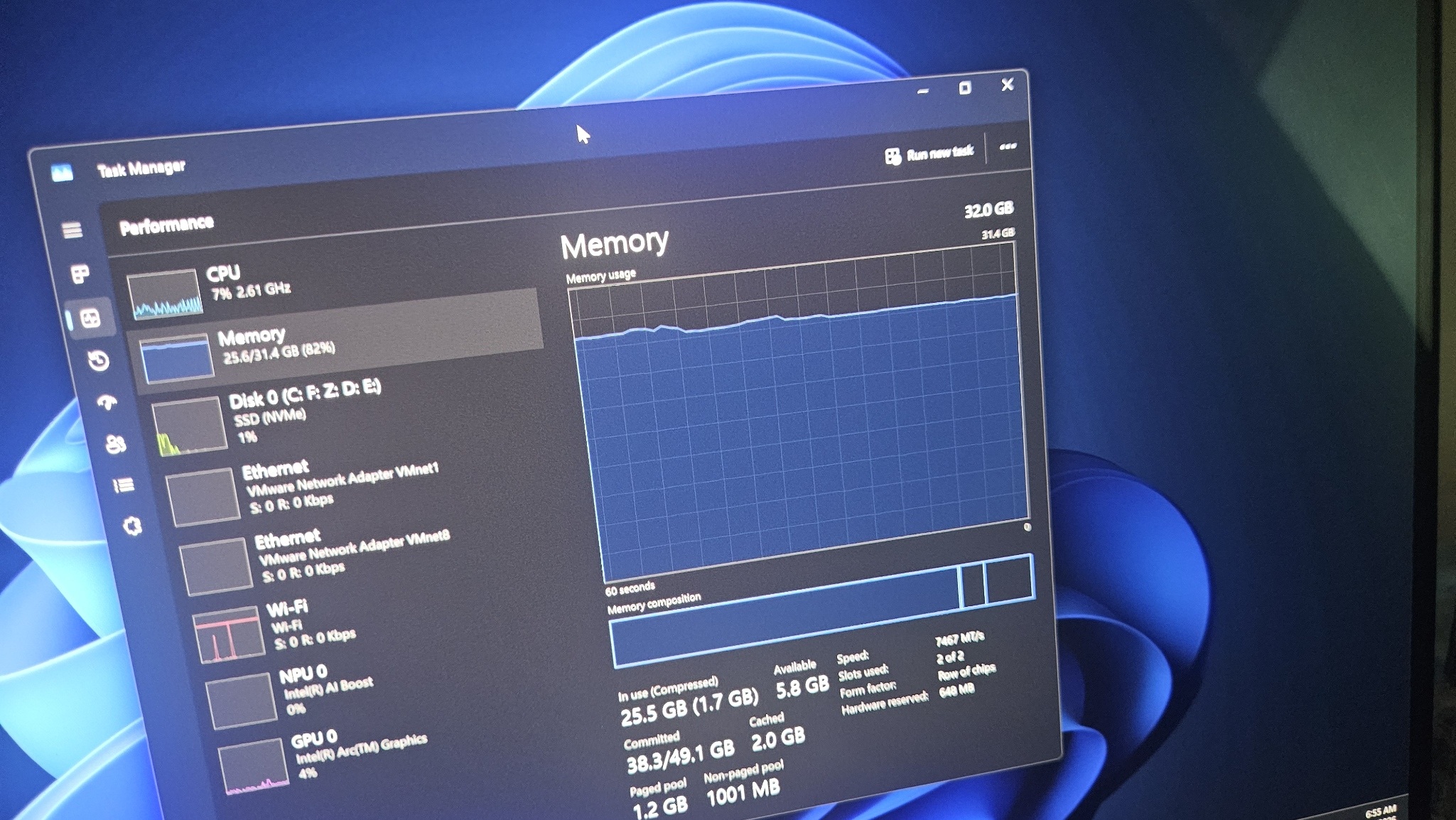
For optimal Windows 11 gaming, essential hardware includes a modern multi-core CPU, at least 16GB of RAM, a powerful DirectX 12 compatible GPU, and crucially, a fast NVMe SSD to leverage DirectStorage. An HDR-capable monitor is also recommended to take advantage of Auto HDR.
Hey fellow gamers! Ever find yourself scrolling through forums late at night wondering, is Windows 11 for gaming the upgrade you need, or just another headache? In 2026, many of us are still balancing demanding jobs, family commitments, and that precious few hours we carve out for virtual adventures. We want our games to run flawlessly, look amazing, and not require a week of troubleshooting to set up. You are not alone if you value relaxation, fun, skill-building, social play, and getting the most bang for your buck without falling for every piece of marketing hype.
The landscape of gaming is constantly evolving. With 87% of US gamers regularly playing and dedicating an average of 10+ hours a week, optimizing our experience matters more than ever. Mobile gaming continues its dominance, yet PC and console cross-play experiences are booming, and social gaming trends show no signs of slowing down. So, when it comes to the core of our PC gaming experience, our operating system, is Windows 11 truly the champion for gamers? Or are we better off sticking with what we know? This article is your comprehensive guide to navigating Windows 11 for gaming, cutting through the noise to give you practical, up-to-date advice on performance, features, and how to make the most of your gaming time.
Is Windows 11 Really Better for Gaming Performance?
When Windows 11 first launched, the gaming community had mixed feelings about its performance. However, fast forward to 2026, and significant updates have refined the experience. Generally, Windows 11 can offer marginal to noticeable performance improvements over Windows 10, especially on newer hardware. The key technologies making a difference are DirectStorage and Auto HDR, which truly shine with compatible games and modern SSDs/displays.
DirectStorage, a feature borrowed from Xbox consoles, allows games to load assets directly from NVMe SSDs to the GPU, bypassing the CPU. This dramatically reduces loading times and can help reduce stuttering in graphically intensive games, freeing up CPU cycles for other tasks. For gamers on a budget who might be running slightly older CPUs but have upgraded to fast NVMe drives, this is a game-changer. Auto HDR, on the other hand, automatically enhances the color and contrast of older games that don't natively support HDR, bringing new life to your favorite classics. While not every game sees a massive uplift, the aggregate effect across various titles can make for a smoother, more visually immersive experience.
What Gaming-Specific Features Does Windows 11 Offer?
Windows 11 comes packed with several gaming-specific features designed to enhance your experience. Understanding these can help you optimize your setup, whether you are trying to squeeze every frame out of a budget rig or maximize your high-end machine.
- DirectStorage: As mentioned, this technology significantly reduces game loading times by allowing data to flow directly from NVMe SSDs to the GPU. This is crucial for large open-world games and quickly loading game assets, making it perfect for those with limited gaming time.
- Auto HDR: This feature automatically upgrades standard dynamic range (SDR) games to high dynamic range (HDR) on compatible displays, providing richer colors and better contrast without requiring game developers to implement it specifically. It breathes new life into older titles.
- Game Mode: Windows 11's Game Mode automatically prioritizes CPU and GPU resources for your game, minimizing background process interference. While sometimes subtle, it can provide a more stable frame rate, especially on systems running multiple applications.
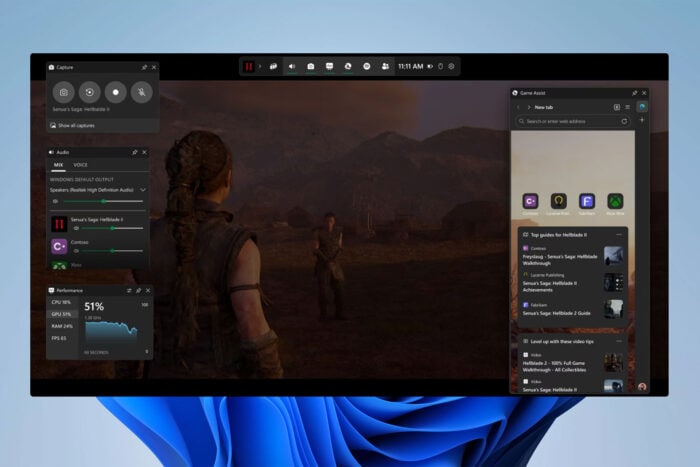
- Xbox Integration: Deeper integration with the Xbox ecosystem includes the Xbox app, Game Pass access, and Game Bar. The Game Bar offers quick access to performance monitoring, screen recording, and social features, making it easier to connect with friends on Discord or stream your gameplay.
- Virtualization-based Security (VBS): While VBS (Memory Integrity) can sometimes impact gaming performance, especially on older CPUs, Microsoft has continuously optimized it. For most modern systems, the performance overhead is negligible, and the security benefits are significant. It's often recommended to test its impact on your specific setup.
How Does Windows 11 Handle Game Compatibility?
Game compatibility on Windows 11 is excellent, mirroring Windows 10 for the vast majority of titles. Microsoft has made it a priority to ensure that Windows 11 supports the extensive back catalog of PC games. From classic titles to the latest AAA releases and popular social games, you are unlikely to encounter major compatibility issues.
However, very occasionally, some extremely old or niche titles might encounter hiccups. These are typically resolved with community patches, running in compatibility mode, or through specific driver updates. For the average gamer, who might be enjoying everything from a quick session of 'Palworld' with friends to diving into a new 'Grand Theft Auto' installment, compatibility is largely a non-issue. It's always a good practice to check game forums or PCGamingWiki if you plan on revisiting a particularly ancient game, but for most modern libraries, you are good to go.
Should You Upgrade to Windows 11 for Gaming if You Have Windows 10?
Deciding whether to upgrade from Windows 10 to Windows 11 for gaming largely depends on your hardware and priorities. If you have a modern PC with an NVMe SSD, an HDR-capable monitor, and a relatively recent CPU/GPU, the upgrade can offer tangible benefits through DirectStorage and Auto HDR. You might experience faster loading times and more vibrant visuals, especially in games optimized for these features.
For gamers on older hardware, or those who are perfectly content with their current Windows 10 experience, the upgrade might not be as compelling. While Windows 11 is a free upgrade, ensuring your system meets the minimum requirements (especially TPM 2.0 and Secure Boot) is essential. If you are struggling with performance on Windows 10, an OS upgrade alone won't magically solve fundamental hardware limitations. Consider your gaming habits: if you primarily play older, less demanding titles, or your current setup already meets your needs, there might be no urgent need to switch. However, if you're building a new PC or buying a new pre-built gaming machine in 2026, it will almost certainly come with Windows 11, and you'll benefit from its optimizations right out of the box.
What are the Minimum System Requirements for Gaming on Windows 11?
To run Windows 11 for gaming smoothly, your PC needs to meet certain specifications. These are the general requirements, but for a truly optimal gaming experience, you'll want to exceed them:
- Processor: 1 GHz or faster with 2 or more cores on a compatible 64-bit processor or System on a Chip (SoC).
- RAM: 4 GB. (For gaming, 8 GB is minimum recommended, 16 GB is ideal).
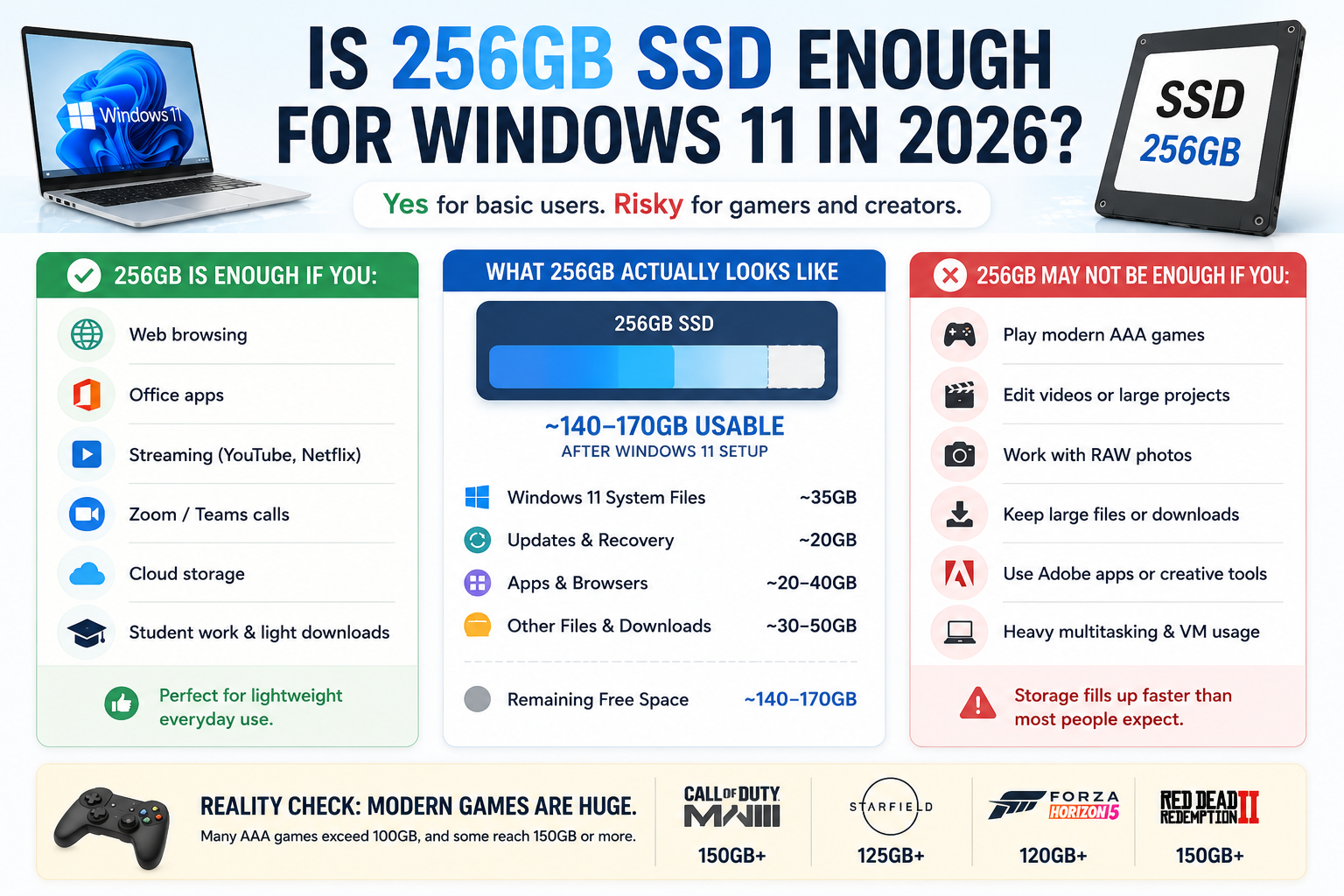
- Storage: 64 GB or larger storage device. (For gaming, an NVMe SSD with 500GB+ is highly recommended).
- System Firmware: UEFI, Secure Boot capable.
- TPM: Trusted Platform Module (TPM) version 2.0.
- Graphics Card: Compatible with DirectX 12 or later with WDDM 2.0 driver.
- Display: High definition (720p) display that is greater than 9” diagonally, 8 bits per color channel. (For gaming, 1080p 144Hz or 1440p/4K high refresh rate is preferred).
- Internet Connection: Microsoft account and internet connectivity required for setup of Windows 11 Home.
Meeting the minimums will get you running, but for serious gaming, particularly in today's demanding titles, aiming for 16GB RAM, a fast NVMe SSD, and a modern graphics card is crucial. This helps prevent bottlenecks and ensures you can enjoy games at higher settings and frame rates.
How Can I Optimize Windows 11 for Peak Gaming Performance?
Even with great hardware, a few tweaks can ensure Windows 11 delivers its best for gaming. Many gamers, juggling work and family, want a quick setup that just works. Here's how to optimize:
- Update Drivers: Always keep your graphics card drivers (NVIDIA, AMD, Intel) and chipset drivers up to date. These often include game-specific optimizations.
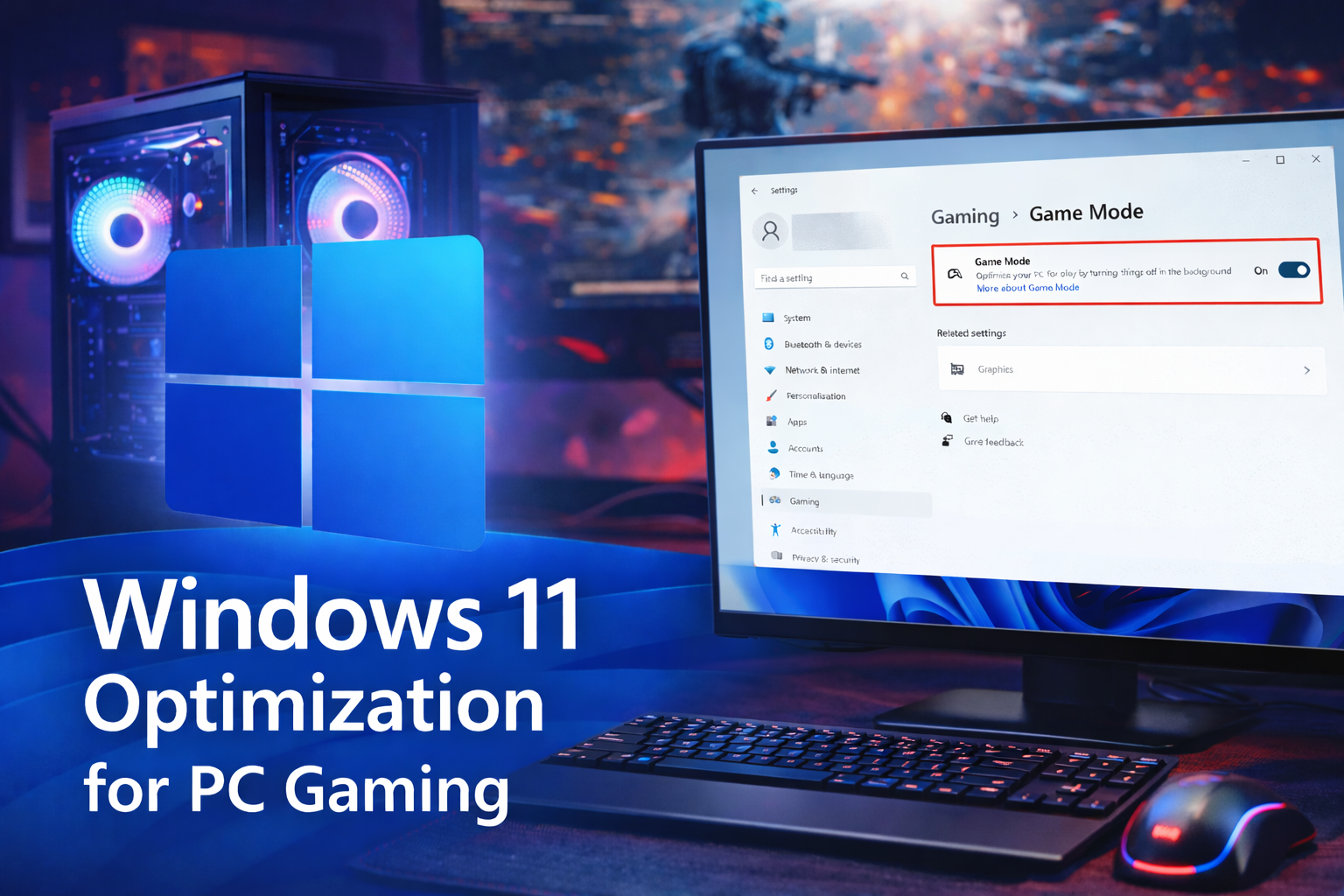
- Enable Game Mode: Go to Settings > Gaming > Game Mode and ensure it is turned on.
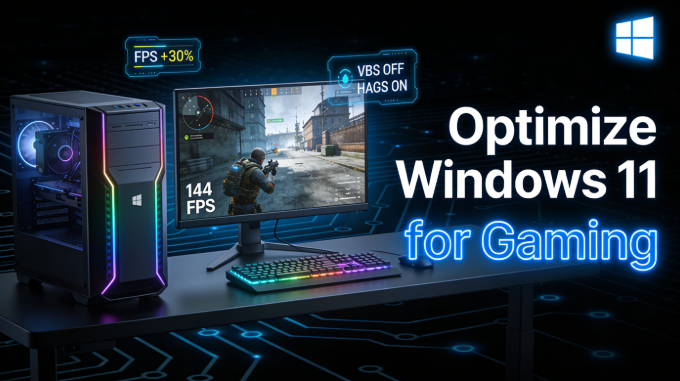
- Turn on Hardware-accelerated GPU scheduling: In Settings > System > Display > Graphics > Change default graphics settings, turn on 'Hardware-accelerated GPU scheduling'. This can reduce latency and improve performance.
- Disable VBS if Performance is an Issue: While VBS offers security benefits, if you experience significant performance drops, you might consider disabling Memory Integrity (Settings > Privacy & Security > Windows Security > Device security > Core isolation > Memory integrity). Be aware of the security implications.
- Adjust Power Plan: Set your power plan to 'High Performance' or 'Ultimate Performance' (if available) in Control Panel > Hardware and Sound > Power Options.
- Close Background Apps: Before launching a demanding game, close unnecessary applications running in the background. Use Task Manager (Ctrl+Shift+Esc) to identify and close resource-intensive apps.
- Optimize Storage: Ensure your games are installed on a fast NVMe SSD. Regularly run Disk Cleanup to remove temporary files.
- Control Notifications: Minimize distractions by enabling 'Focus Assist' (now called Focus sessions) or simply disabling notifications during gaming sessions.
Are There Any Drawbacks to Gaming on Windows 11?
While Windows 11 offers many positives for gamers, it's not entirely without potential drawbacks, especially for specific users or configurations. Understanding these can help manage expectations and avoid frustration:
- Initial Performance Hiccups: Early versions of Windows 11 did have some performance issues, particularly with AMD CPUs. Most of these have been resolved through updates, but it highlights the potential for new OS versions to have unforeseen bugs impacting specific hardware.
- Security Features & Performance: Virtualization-based Security (VBS) and other security enhancements, while beneficial for overall system security, can sometimes introduce a small performance overhead, particularly on older or lower-end CPUs. For competitive gamers chasing every frame, disabling VBS might be considered, though it comes with reduced security.
- UI Changes and Learning Curve: The updated user interface can take some getting used to. For gamers who just want to launch their game and go, navigating new menus or finding familiar settings can be a minor annoyance.
- Strict System Requirements: The TPM 2.0 and Secure Boot requirements mean older PCs might not be able to upgrade officially, forcing some users to stick with Windows 10 or purchase new hardware. This can be a barrier for budget-conscious gamers.
- Software Compatibility for Niche Apps: While game compatibility is excellent, some very old or niche gaming utilities, anti-cheat software, or specific hardware drivers might initially have compatibility issues, though these are rare and usually patched quickly.
How Does Windows 11 Support Social Gaming and Streaming?
For the modern gamer, playing isn't just about solo campaigns; it's about connecting with friends, building communities, and even streaming your adventures. Windows 11 enhances this social aspect significantly.
The built-in Xbox App provides seamless access to your Xbox Game Pass library, friends lists, and party chats, making it easy to jump into a co-op session or competitive match. The Game Bar (Win + G) is a powerful overlay that lets you monitor performance, capture screenshots or record gameplay, manage audio, and chat with friends—all without leaving your game. This is incredibly helpful for quickly sharing epic moments or troubleshooting with teammates. With more gamers embracing streaming, Windows 11's optimized resource management can help ensure your game runs smoothly even while streaming to platforms like Twitch or YouTube, especially when combined with a powerful GPU that handles encoding efficiently. Plus, with the rise of cross-play, Windows 11 integrates well, allowing PC gamers to connect with console players in popular titles, fostering a larger, more vibrant online community.
FAQ Section
Here are some quick answers to common questions about Windows 11 for gaming.
Q: Is Windows 11 required for DirectStorage?
A: Yes, DirectStorage is a core feature of Windows 11. While some elements might eventually come to Windows 10, the full benefits require Windows 11 and an NVMe SSD.
Q: Can I run old games on Windows 11?
A: Most old games run perfectly fine on Windows 11. For very old or niche titles, you might need to use compatibility mode settings.
Q: Does Windows 11 affect my existing game library?
A: No, upgrading to Windows 11 should not affect your existing game library. Your installed games will remain, and Steam, Epic Games, and other launchers will function as usual.
Q: Is Windows 11 better for competitive esports gaming?
A: For competitive esports, Windows 11 offers marginal benefits over a highly optimized Windows 10 setup. The key is stable frame rates and minimal input lag, which both OS can provide. DirectStorage could offer advantages in games with heavy asset loading.
Q: Will my FPS drop if I upgrade to Windows 11?
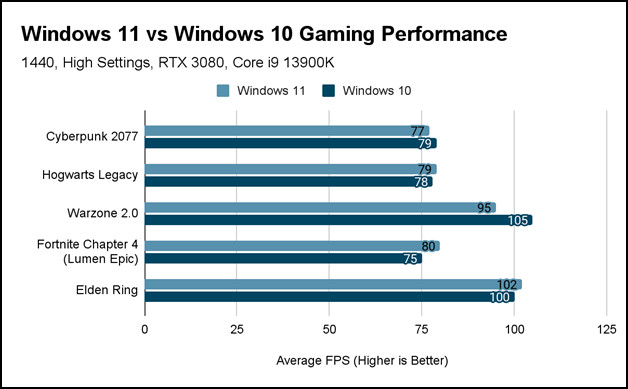
A: Most modern systems will see similar or slightly improved FPS. Some early issues caused drops, but these have largely been patched. On very old hardware or specific configurations, minor drops are possible.
Q: Do I need a specific CPU for Windows 11 gaming?
A: You need a compatible 64-bit CPU (1 GHz with 2+ cores) that meets Windows 11 requirements. For gaming, a modern multi-core processor (Intel 8th Gen or newer, AMD Ryzen 2000 series or newer) is recommended for optimal performance.
Q: How important is TPM 2.0 for gaming on Windows 11?
A: TPM 2.0 is a strict requirement for installing Windows 11. While not directly performance-related for gaming, it's essential for the OS itself. Most modern motherboards have it enabled by default or can be enabled in BIOS.
So, is Windows 11 for gaming a worthwhile upgrade in 2026? For most gamers with modern hardware, the answer is a resounding yes. With features like DirectStorage and Auto HDR, improved performance optimizations, and robust game compatibility, it offers a smoother, more immersive, and visually richer experience. While minor tweaks might be needed for peak performance, the overall picture is positive. Whether you're unwinding with a cozy game after a long day or climbing the ranks in a competitive shooter, Windows 11 provides a solid foundation for your gaming adventures. What's your biggest gaming challenge with Windows 11? Comment below and let's help each other out!
Windows 11 gaming performance insights 2026. DirectStorage and Auto HDR benefits. Game compatibility and optimization tips. System requirements for optimal gaming. Balancing work life and play with Windows 11.
34

Windows 11 Home Vs Pro For Gaming Which One Is Better For Gamers Windows 11 Home Vs Pro For Gaming. Windows 10 Vs Windows 11 For Gaming Which Is Faster 2026 Opengraph Image. Windows 11 Home Vs Pro For Gaming Which Is Better Msckey Windows 11 Home Vs Pro For Gaming Which Is Better 1200x675 . How To Optimize Windows 11 For Gaming In 2026 Get Up To 15 FPS How To Optimize Windows 11 For Gaming . Windows 10 Vs Windows 11 For Gaming Which Is Faster 2026 Image

Microsoft Publishes New Windows 11 Gaming For Modern PCs Microsoft Releases Updated Windows 11 Gaming Hardware Guide 700x467 . Windows 11 Gaming Roadmap OS Level AI Upscaler And Precompiled Shaders 89199 . Windows 11 Review Is It Worth The Upgrade In 2026 Windows 11 Review 2026 -- WiTechPedia . Microsoft Quietly Deletes Windows 11 Doc Pushing 32GB RAM For Gaming 32GB RAM Controversy On Microsoft Document . Ultimate Windows 11 Gaming Performance Tweaks Pro Tips Setup Optimizing Windows 11 Gaming Permormance


Microsoft Quietly Deletes Windows 11 Doc Pushing 32GB RAM For Gaming Windows 11 32GB RAM Controversy . Windows 11 For Gaming Joule Performance Header Windows 11 Gaming Page HEADER MOBILE . Which Windows 11 Version Is Best For Gaming 2026 Guide Otaku Rig Gemini Generated Image. Microsoft Details Major Windows 11 Gaming Overhaul Performance AI Windows 11 Gaming Updates Performance AI Upscaling Console Experience 20251211 023044 . First Windows 11 26H1 Official Feature Update Big February 2026 THUMB 15



Windows 11 Running Slow 13 Fixes That Work 2026 ChatGPT Image Jan 17 2026 09 46 57 AM 768x512 . Windows 10 Or 11 For Gaming Find Out Which One Is Best Blog Mr Key Shop Windows 11 Gaming 1024x682 . 7 Powerful Ways To Optimize Windows 11 For Gaming Performance Optimizing Windows 11 For Gaming.webp. Windows 11 Microsoft Promises More Gaming Performance For 2026 Igor SLAB Screenshot 2025 12 10 091243 . How To Optimize Windows 11 For Gaming 15 Ways Latest How To Optimize Windows 11 For Gaming.webp

Windows 11 Gaming How Good Is It YouTube . Xbox Ally 2026 Update Roadmap For Gaming On Windows 11 . Windows 11 For Gaming At Edward Gratwick Blog . Is Windows 11 Good For Gaming Know Before Upgrading Gaming Performance In Windows 11 Vs 10 . Windows 11 Gaming 2026 OS Level For Handhelds And Auto 86520

How To Optimize Windows 11 For Gaming Performance In 2026 YouTube . Windows 11 Gaming At Francis Seal Blog Windows 11 Gaming 7lK . Windows 11 Looks Set For A Big Update Early In 2026 But Most People 2560 80 . Microsoft Finally Admits Windows 11 Needs Real Performance Upgrade 2026 Will Be The Year Of Gaming In Windows 11 696x392 . Is 256 GB Still Enough For Windows 11 In 2026 How Much Stoarge Windows 11 Need

How To Optimize Windows 11 For Gaming And Gain FPS Optimize Windows11 For Games.PNG. Xbox Ally 2026 Update Roadmap For Gaming On Windows 11 840 80 . Microsoft Sets 2026 End Of Life For Office 2021 And Windows 11 24H2 Microsoft Sets 2026 End Of Life For Office 2021 And Windows 11 24H2 . Is Windows 11 Good For Gaming PCs In 2025 4b4834c1 7167 49c8 921f